




Watch: What Goes on a Professional Invoice
In under three minutes, this video walks through every section your invoice should include.
The complete invoice checklist
Every professional invoice has five core sections. Work through each one and you won't leave anything out.
Invoice Details
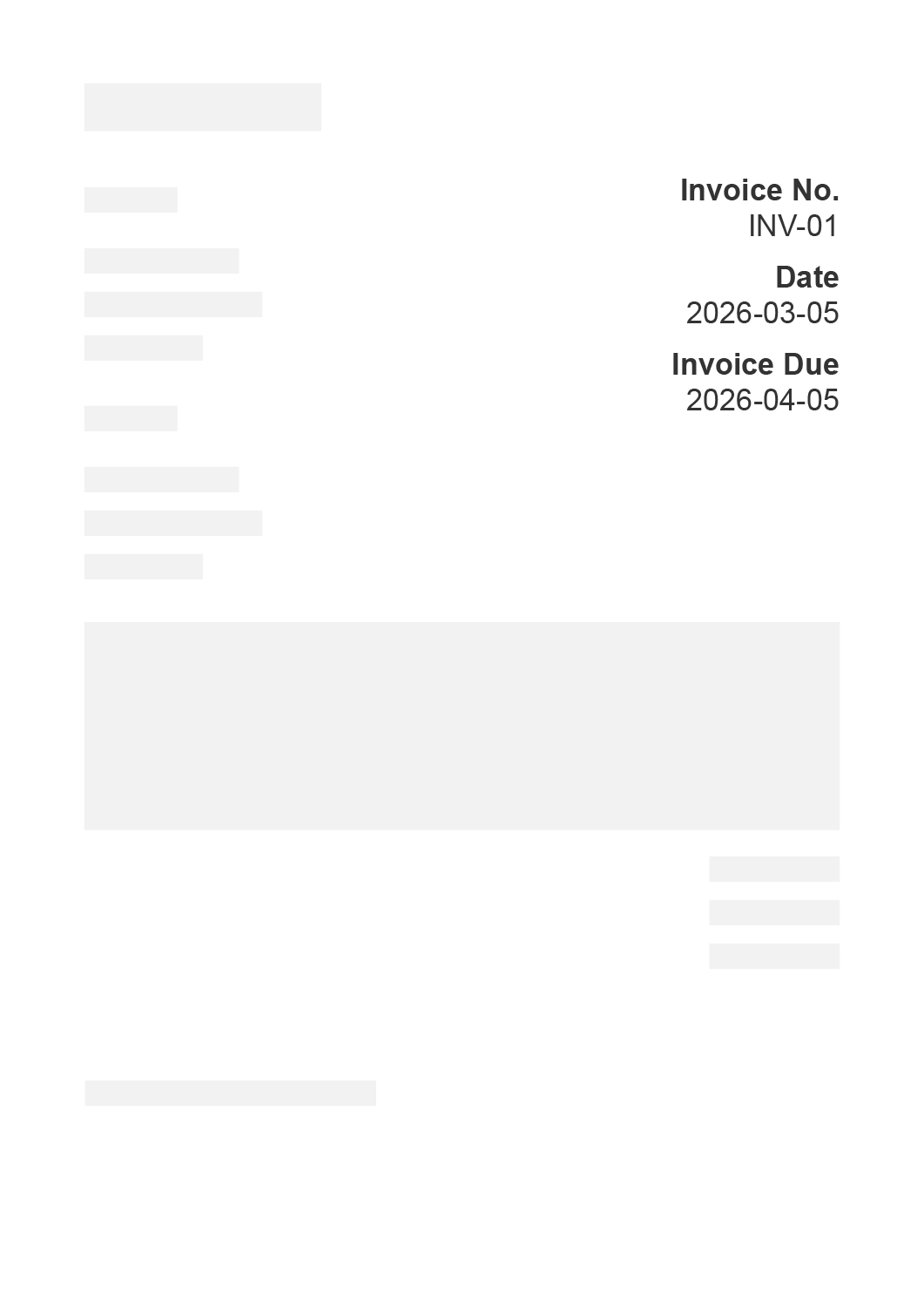
These are the administrative basics that let both you and your client track, reference, and reconcile payments with ease.
-
Invoice Number — Every invoice you send should have its own unique number, this makes keeping records easier for yourself, and your client, and allows you to find it easier in the future, should you need to.
-
Invoice Date — The date you're issuing the invoice. This is also when your payment terms start counting.
-
Due Date — Always include a due date. It sets clear expectations and makes it much easier to follow up if a client is late. 'Net 30', meaning, 30 days from the invoice date is a common standard.
Your Details
Your client needs to know exactly who is billing them. Make sure this information is accurate and up to date.
-
Your Name or Business Name — Whether you operate as an individual or a registered business, this should appear prominently at the top of every invoice you send.
-
Address — Your business or home address. This is also often required for legal and tax purposes.

Client Details
Addressing your invoice to the right person or company ensures it gets to the right place and is processed promptly.
-
Client's Name or Company Name — If you're invoicing a company, use the registered business name. For larger organisations, check who in their accounts team the invoice should be addressed to.
-
Client's Address — Include your client's postal address. Keeping a saved list of clients via an online tool such as BooInvoice.com makes this quick to fill in on repeat invoices.

Line Items
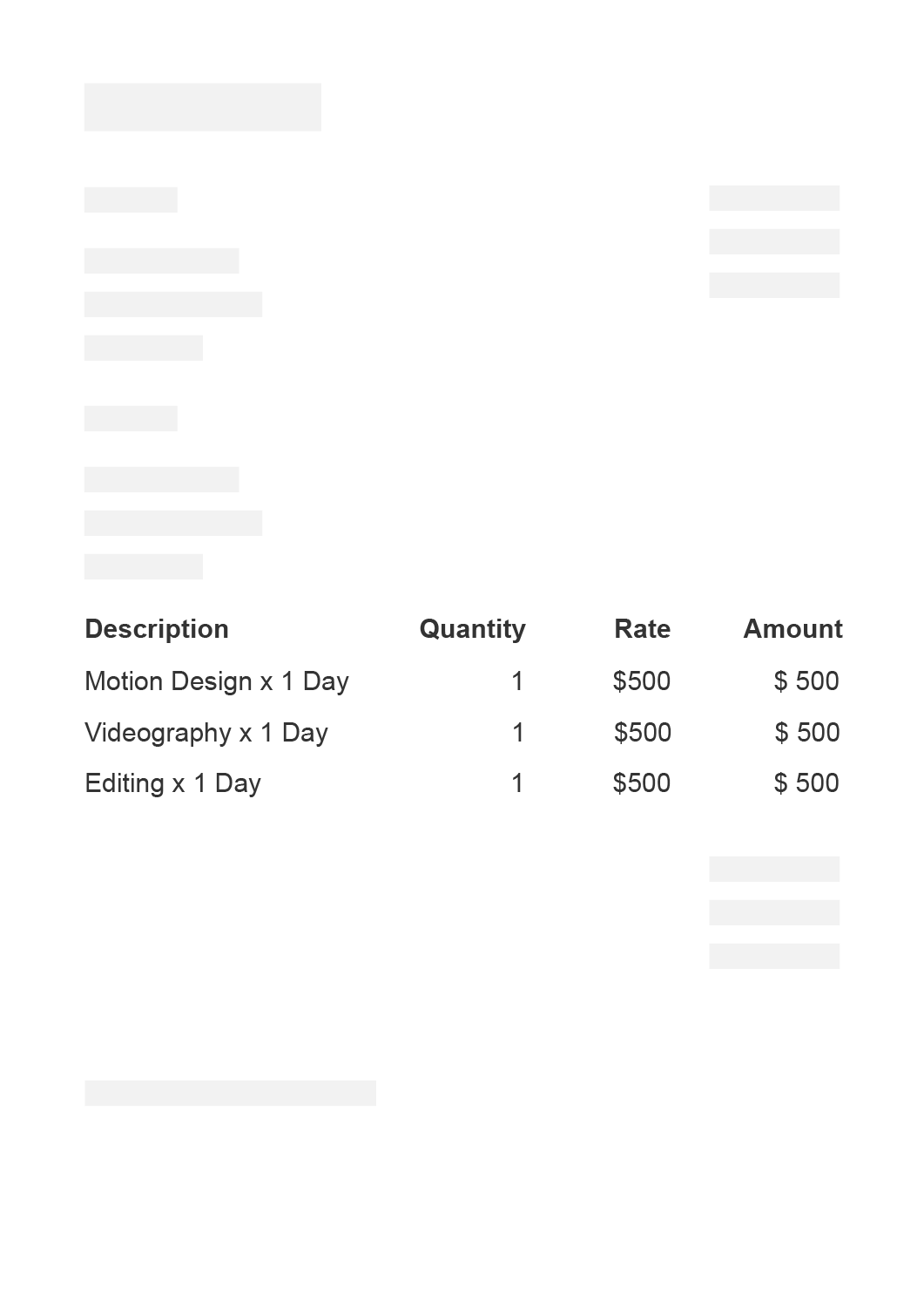
This is where you detail exactly what you're charging for. An itemised breakdown always looks more professional than a single total — and it removes any room for disputes.
-
Description of Services or Products — List each service or product clearly. For example, if you're a videographer, you might have separate line items for Motion Design, Videography, and Video Editing.
-
Quantity and Rate — Set the quantity (e.g. number of days or units) and your rate for each item. The line total should be quantity multiplied by rate.
-
Currency — Always make it clear which currency you're invoicing in, especially if you work with international clients.
-
Tax (if applicable) — If you need to charge VAT or another tax, show it as a separate line item with the rate and amount clearly stated.
Payment & Additional Information
Your invoice should always make it crystal clear how you expect to be paid, and when.
-
Payment Details — Include how you'd like to be paid — for example, a bank account number or a PayPal email address. Important: only include information you'd be comfortable with anyone seeing. Never include passwords, full card numbers, or any sensitive credentials.
-
Payment Terms — State your payment terms clearly — for example, "Payment due within 30 days." You can also add a friendly thank-you message here to leave a positive impression.
-
Your Business Logo — Upload your logo to give your invoice a polished, professional finish. It's a small touch that makes a big difference to how your business is perceived.

Free to use — no account required
Why a Proper Invoice Gets You Paid Faster
A well-structured invoice isn't just about looking professional — it directly affects how quickly and reliably you get paid.
Avoids Disputes
An itemised breakdown leaves no ambiguity about what was delivered and what the client owes. Clear invoices mean fewer awkward conversations.
Sets Clear Expectations
A due date gives your client a firm deadline to work to, and gives you a clear basis for following up if payment is late.
Builds Trust
A polished, professional invoice signals that you run a legitimate, organised business — making clients more confident in paying promptly.
Frequently asked questions
What must be included in an invoice?
Every invoice should include a unique invoice number, the invoice date and a due date, your name and contact details, your client's name and address, an itemised list of services or products with quantities and rates, the total amount due, and your payment details.
Do I need to include a due date on an invoice?
Yes — always. A due date sets clear expectations with your client and makes it far easier to follow up if payment is late. Without one, there's nothing to point to when chasing an overdue invoice. Net 30 days from the invoice date is a common and widely accepted standard.
Should I itemise my invoice or just show a total?
Always itemise. A breakdown of each service or product looks more professional, reduces the chance of payment disputes, and gives your client complete clarity on what they're paying for. A single lump-sum total invites questions.
What payment details should I include on an invoice?
Include the payment method you accept — for example, your bank account number or a PayPal email address. Never include passwords, full card numbers, or any sensitive credentials. Your invoice is a PDF that gets emailed to clients, so treat it as a public-facing document.
Should I add my business logo to an invoice?
Yes. Adding your logo gives your invoice a polished, professional finish and reinforces your brand. It also makes the invoice immediately recognisable to your client, which can help it stand out in a busy inbox and get actioned faster.
Do I need to charge tax on my invoice?
This depends on your location, business type, and turnover. If you are VAT registered (or your local equivalent), you will typically need to apply tax to your invoices. If you're unsure, check with a local accountant or your country's tax authority.